Sport & leisure
Sport and leisure activities form a cornerstone of human wellbeing, offering far more than simple entertainment. Whether you’re lacing up running shoes for a morning jog, joining a recreational league, or venturing into the wilderness for a weekend camping trip, these pursuits shape our physical health, mental resilience, and social connections in profound ways. Yet the landscape of sport and leisure can feel overwhelming, with conflicting advice about training methods, recovery protocols, and skill development creating confusion rather than clarity.
This comprehensive resource bridges the gap between ambition and understanding. We’ll explore the fundamental principles that underpin effective physical training, uncover why recovery matters as much as effort, examine how nutrition fuels performance, discover the surprising social benefits of organized activities, learn proven injury prevention strategies, and master essential outdoor skills that expand your recreational horizons. Whether you’re taking your first steps into an active lifestyle or seeking to deepen your existing practice, these interconnected concepts provide the foundation for sustainable, enjoyable participation.
Building Physical Fitness: Training and Performance
Understanding how to structure physical training represents the difference between random activity and purposeful progress. The human body responds to exercise through predictable adaptations, but only when the stimulus matches your current capacity and goals.
Training Zones and Intensity Management
Training zones divide exercise intensity into distinct ranges, each triggering different physiological responses. Picture five zones along a spectrum: Zone 1 feels conversational and easy, perfect for active recovery; Zone 2 allows sustained effort where you could still speak in sentences, building aerobic foundation; Zone 3 sits at a moderately hard threshold; Zone 4 pushes into uncomfortable territory with heavy breathing; Zone 5 represents maximum effort sustainable only for brief intervals. Most beginners make the critical error of training in a “gray zone” between easy and hard, missing the specific benefits of both extremes. Research consistently shows that approximately 80% of training time should occur in easy zones (1-2), with only 20% in harder efforts, a distribution that paradoxically produces better results than constant moderate intensity.
Choosing Your Training Modality
The question “What type of exercise should I do?” overlooks a fundamental truth: the best modality is the one you’ll actually maintain. That said, different activities offer distinct advantages. Running and cycling excel at cardiovascular development with minimal equipment. Swimming provides joint-friendly full-body conditioning. Resistance training builds strength and preserves muscle tissue in ways cardio alone cannot. Team sports add unpredictable movement patterns and social engagement. Rather than searching for a single perfect activity, consider a complementary approach that addresses multiple fitness dimensions while aligning with your practical constraints and genuine interests.
The Essential Role of Muscle
Muscle tissue serves as far more than an aesthetic feature or athletic tool. It functions as a metabolic organ that regulates blood sugar, supports bone density, maintains mobility, and even produces compounds that protect brain health. After approximately age thirty, adults naturally lose muscle mass at a rate of 3-5% per decade without intervention, a process called sarcopenia that accelerates health decline. The antidote is elegantly simple: progressive resistance training. This means gradually increasing the challenge placed on muscles through heavier weights, more repetitions, or greater complexity. Two to three sessions weekly, targeting major muscle groups, provides sufficient stimulus for most people to maintain and build strength throughout their lifespan.
Recovery: The Hidden Key to Progress
The fitness industry obsesses over workouts while often neglecting the equally important question: what happens between training sessions? Adaptation doesn’t occur during exercise itself but during the recovery period that follows. Understanding this relationship transforms how you approach programming.
Recognizing Overtraining Risk
More exercise does not automatically produce better results. Beyond a certain threshold, additional volume begins undermining rather than enhancing adaptation. Overtraining syndrome manifests through several warning signs: persistent fatigue that rest doesn’t resolve, declining performance despite maintained effort, elevated resting heart rate, disrupted sleep patterns, increased susceptibility to illness, and mood disturbances. The challenge lies in distinguishing productive discomfort from destructive excess. A useful guideline suggests that if performance metrics decline across three consecutive sessions despite adequate sleep and nutrition, you’ve likely exceeded your current recovery capacity.
Strategic Recovery Weeks
Periodically reducing training volume allows accumulated fatigue to dissipate while maintaining adaptations. Think of it like compressing a spring before it can bounce higher. Every third or fourth week, consider dropping training volume by 40-50% while maintaining intensity. This doesn’t mean complete rest, but rather easier, shorter sessions. Many athletes report that their best performances occur not after their hardest training weeks, but after strategic recovery periods when the body finally has resources to complete the adaptation process. This counterintuitive principle separates sustainable long-term development from boom-bust cycles that lead to burnout or injury.
Recovery Modalities and Longevity
Various recovery tools promise accelerated adaptation, but most deliver marginal benefits compared to fundamentals: adequate sleep, proper nutrition, and stress management. That said, certain approaches offer legitimate value. Active recovery through light movement promotes blood flow without creating additional stress. Mobility work addresses movement restrictions that might contribute to compensation patterns. Massage and foam rolling may reduce perceived soreness and improve range of motion, though their mechanisms remain debated. Cold exposure and heat therapy each trigger distinct physiological responses. The key is maintaining perspective: these tools supplement but never replace the basics. A well-rested athlete with mediocre recovery modalities will always outperform an exhausted athlete with every cutting-edge tool.
Fueling Your Body: Nutrition and Hydration
Performance and recovery depend not only on training stimulus but on providing your body with appropriate raw materials for adaptation. Nutrition doesn’t need to be complicated, but several principles consistently separate effective from ineffective approaches.
Energy Management Throughout the Day
When you eat may matter almost as much as what you eat. Energy availability refers to the fuel remaining after accounting for exercise expenditure. Chronic low energy availability compromises hormone production, immune function, bone health, and recovery capacity. Matching nutrient timing to activity patterns helps optimize both performance and wellbeing. Many people benefit from larger meals around training windows when nutrient partitioning favors muscle glycogen storage and protein synthesis, with lighter eating during sedentary periods. This doesn’t require obsessive precision, but rather attention to patterns: consistent energy crashes mid-afternoon might indicate insufficient breakfast protein; poor training performance could signal inadequate pre-exercise fueling.
Hydration Protocols That Work
Dehydration of just 2% body weight measurably impairs both physical and cognitive performance. Yet overhydration creates its own problems, potentially leading to dangerous electrolyte dilution. An effective hydration protocol accounts for several factors: baseline fluid needs (roughly 30-35ml per kilogram of body weight daily), additional losses through sweat during activity, and electrolyte replacement for sessions exceeding ninety minutes or in hot conditions. The color of your urine provides useful feedback: pale yellow suggests appropriate hydration, while clear might indicate overdrinking, and dark yellow signals insufficient intake. During exercise, aim to replace approximately 75-80% of fluid losses rather than matching them completely, which allows natural thirst mechanisms to guide fine-tuning.
Managing Blood Sugar and Energy Stability
The familiar pattern of energy spikes followed by crashes often traces back to blood sugar dysregulation. Consuming high amounts of simple sugars triggers rapid insulin release, which can overshoot and create rebound hypoglycemia. This rollercoaster affects not only energy levels but also mood, focus, and appetite regulation. The solution involves several strategies working in concert:
- Pairing carbohydrates with protein and fat to slow digestion and moderate blood sugar response
- Emphasizing complex carbohydrates that provide sustained release rather than rapid spikes
- Timing simple sugars strategically around intense exercise when muscles readily absorb glucose
- Maintaining regular meal timing to stabilize metabolic rhythms
Sleep, Light, and the Adenosine System
Energy management extends beyond food to encompass sleep quality, which itself depends partly on light exposure patterns. During waking hours, a compound called adenosine accumulates in the brain, creating increasing pressure to sleep. Caffeine works by temporarily blocking adenosine receptors, which is why it promotes alertness but doesn’t eliminate underlying sleep debt. Light exposure, particularly in the blue spectrum, suppresses melatonin production and signals daytime to your circadian system. For optimal sleep and recovery, prioritize bright light exposure early in the day, limit blue light in the evening hours before bed, and maintain consistent sleep-wake timing even on weekends. These practices strengthen circadian rhythms, which in turn regulate hormone production, immune function, and countless other processes affecting performance and recovery.
The Social Dimension of Sport and Leisure
While physical benefits often motivate initial participation in sport and leisure activities, the social connections formed frequently become the primary reason people continue. This dimension deserves deliberate attention rather than being left to chance.
Adult Social Development Through Shared Activity
Making friends as an adult presents unique challenges compared to childhood, when proximity and shared schedules naturally created social opportunities. Organized sport and leisure activities recreate those conditions: regular gatherings around shared interests with built-in conversation topics and common goals. The activity itself reduces social pressure by providing a focus beyond conversation while the repeated exposure builds familiarity. Whether joining a running club, recreational volleyball league, climbing gym community, or hiking group, the structure supports relationship formation in ways that isolated exercise or purely social gatherings often don’t. Research on adult friendship formation suggests that developing close bonds requires approximately 200 hours of time together, emphasizing the value of consistent, long-term participation rather than sporadic attendance.
Finding and Committing to Leagues
Recreational leagues exist for virtually every sport across skill levels, yet many people hesitate to join due to concerns about ability or fitting in. Most adult leagues specifically cater to beginners and intermediate players, with divisions separating competitive levels. Finding options has become increasingly straightforward through dedicated platforms, community recreation centers, and social media groups. The key decision point often involves commitment level: some leagues require season-long participation while others allow drop-in attendance. For beginners, low-commitment formats reduce pressure while you determine genuine interest, though the deeper social connections typically develop in contexts requiring sustained participation. Consider starting with a single season as an experiment rather than an indefinite commitment, removing the psychological barrier of perceived permanence.
Staying Safe and Resilient
Sustainable participation in sport and leisure requires managing injury risk and developing mental strategies to navigate challenges. Prevention and resilience form complementary aspects of long-term success.
Understanding and Reducing Injury Rates
Different activities carry varying injury profiles. Contact sports obviously involve collision risk, while running-related injuries typically stem from overuse rather than acute trauma. Several factors consistently predict injury across activities: rapid increases in training volume (the “too much, too soon” phenomenon), inadequate recovery, previous injury, poor movement patterns, and strength imbalances. The single most effective prevention strategy involves graduated progression, often formalized as the “10% rule” suggesting weekly training volume increases stay below that threshold. Additionally, maintaining strength in muscles surrounding joints creates protective stability, while addressing mobility limitations prevents compensatory movement patterns that concentrate stress in vulnerable areas.
Season Preparation for Reduced Risk
Many recreational athletes make the mistake of starting seasonal sports at full intensity without adequate preparation. A basketball player who doesn’t touch a ball for eight months then jumps into competitive games faces dramatically elevated injury risk compared to someone who spent weeks gradually conditioning. Effective season preparation progressively reintroduces sport-specific demands through a logical sequence: general conditioning first, then movement patterns specific to the sport, followed by sport skills at reduced intensity, and finally full-speed competition. This process typically requires 4-6 weeks minimum, longer for activities with high skill or intensity demands. The investment pays dividends in both injury prevention and performance, as your body adapts to specific demands rather than being shocked by them.
Building Psychological Resilience
Mental challenges in sport and leisure often prove more limiting than physical constraints. Learning to manage discomfort, navigate setbacks, maintain motivation through plateaus, and handle competitive pressure represents trainable skills rather than fixed traits. Psychological resilience develops through several practices: setting process goals (focused on actions you control) alongside outcome goals (focused on results); reframing challenges as opportunities for growth rather than threats; developing pre-performance routines that create psychological consistency; and practicing self-compassion when facing difficulties rather than harsh self-criticism. Interestingly, regularly exposing yourself to manageable challenges in sport contexts appears to build broader resilience that transfers to other life domains, suggesting these activities serve as valuable training grounds for mental toughness generally.
Outdoor Adventure Skills
Wilderness activities represent a distinct category within leisure pursuits, offering unique rewards while requiring specialized knowledge. Developing fundamental outdoor skills expands recreational possibilities while enhancing safety and confidence.
Essential Fire and Shelter Skills
The ability to create fire and shelter forms the foundation of wilderness competence. Fire starting requires understanding the fire triangle (fuel, oxygen, heat) and implementing it through proper material selection and technique. Begin by gathering tinder (dry materials that catch from sparks or small flames), kindling (small sticks that bridge tinder to larger fuel), and fuel wood (larger pieces that sustain the fire). Structure matters enormously: teepee arrangements allow maximum airflow for initial establishment, while log cabin structures create sustained burn. Modern tools like ferrocerium rods provide reliable ignition in wet conditions where matches might fail.
Shelter construction follows logical principles: insulation from the ground (which conducts heat away from your body rapidly), protection from wind and precipitation, and heat retention. Even a simple lean-to created from branches and debris can dramatically improve survivability in challenging conditions. The key lies in understanding that shelter doesn’t mean comfort but rather reducing the environmental stress that leads to hypothermia or hyperthermia.
Navigation, Plant Knowledge, and Tool Skills
While GPS technology has simplified navigation, developing traditional skills provides redundancy and deeper environmental connection. Map and compass proficiency, understanding natural navigation cues (sun position, star patterns, vegetation indicators), and maintaining spatial awareness all contribute to confident wilderness travel.
Knowledge of edible plants enhances both safety and experience, though this requires careful study as misidentification can prove dangerous. Start by learning a few unmistakable species in your region rather than attempting comprehensive knowledge. Many wilderness education programs teach the “universal edibility test” for unknown plants, though this should be considered a survival last-resort rather than casual practice.
Knife skills encompass safe handling, maintenance, and various cutting techniques for tasks from food preparation to shelter building. The fundamental principle involves always controlling the direction of force, ensuring that if the blade slips, it moves away from your body. Regular sharpening maintains effectiveness while actually improving safety, as dull blades require excessive force that increases accident risk.
Managing Fear and Panic
Perhaps the most critical outdoor skill involves psychological management when facing unexpected challenges. Panic control begins with recognition: breathing becomes rapid and shallow, decision-making degrades, and perceived threat overshadows actual assessment. The remedy starts with deliberate breathing regulation, as this physiological intervention directly influences your nervous system state. The acronym STOP provides a useful framework: Stop moving, Think about your situation, Observe your environment, and Plan your next steps. Most outdoor emergencies result from cascading poor decisions made under stress rather than single catastrophic events, meaning that restoring calm, rational thinking often represents the difference between minor inconvenience and serious crisis.
Sport and leisure activities offer a remarkable return on investment, enhancing physical health, mental wellbeing, social connection, and practical skills simultaneously. The journey from beginner to experienced participant doesn’t require exceptional talent but rather consistent application of sound principles: training intelligently within your capacity, prioritizing recovery as highly as effort, fueling your body appropriately, connecting with communities of practice, managing injury risk through preparation, and developing both physical and mental skills progressively. Start where you are, focus on fundamentals, and trust that sustainable practice compounds into transformative results over time.
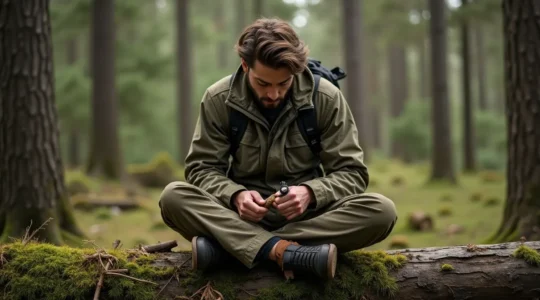
Why Learning Bushcraft Skills Reduces Daily Anxiety?
Contrary to popular belief, bushcraft’s power against anxiety doesn’t come from ‘escaping’ civilization, but from actively rewiring your brain through tangible, real-world problem-solving. It replaces abstract modern worries with immediate, solvable physical challenges, providing clear feedback loops that build agency….
Read more
Can’t Make Friends as an Adult? Why Team Sports Are Your Best Play
The fastest way to build genuine friendships as an adult isn’t through awkward networking events, but by strategically using team sports to create bonds forged by shared effort. The stress and success of a game trigger neurochemicals like oxytocin, creating…
Read more
How to Eliminate the Afternoon Slump Without Caffeine?
In summary: The afternoon slump is a biological event, not a willpower failure, caused by adenosine buildup and circadian rhythms. Delaying morning coffee by 90 minutes allows natural adenosine clearance, preventing a later crash. Proper hydration with electrolytes, not just…
Read more
How to Maintain Muscle Mass After 40 to Ensure Long-Term Independence?
Contrary to popular belief, significant muscle loss after 40 is not an inevitable fate but a preventable condition caused by neglecting your body’s underlying cellular machinery. True longevity comes from building your “mitochondrial engine” with specific aerobic training, which powers…
Read more