Building an art collection on a budget is less about luck and more about adopting an investor’s strategic mindset to identify undervalued assets.
- Focus on emerging artists and limited edition prints, which offer the highest potential for appreciation at accessible entry points.
- Use data-driven frameworks, like a “Collector’s Scorecard” and provenance checks, to validate an artwork’s long-term value beyond social media hype.
Recommendation: Shift your perspective from simply buying art you like to building a portfolio where your “educated gut”—a blend of personal taste and objective analysis—guides every acquisition.
The idea of collecting art can feel like an exclusive club with a high cost of entry. For many young professionals, the gallery floor seems like a test you haven’t studied for, and auction houses appear as impenetrable fortresses of the ultra-wealthy. The common advice, “just buy what you love,” while well-intentioned, is often unhelpful. It doesn’t address the core desire of a savvy individual: to make a smart purchase that is not only aesthetically pleasing but also a sound financial asset. You’re not just looking for decoration; you’re looking for an investment that enriches your life and potentially your net worth.
The traditional path seems to involve navigating a complex world of gatekeepers, opaque pricing, and a language you don’t speak. But what if the real key to starting a meaningful collection wasn’t about having a massive budget or an art history degree? What if it was about shifting your mindset from that of a passive consumer to an active investor? The secret lies in learning to read the market signals, understanding the difference between fleeting hype and lasting value, and developing an “educated gut” that balances emotional connection with strategic analysis.
This guide demystifies the process by providing a clear framework. It will show you why emerging artists offer superior returns, how to differentiate a valuable print from a poster, where to spot risks like “Instagram-famous” art, and ultimately, how to use data to inform your intuition. It’s time to stop being intimidated and start building a collection with a clear thesis, even with a budget under $1,000.
This article provides a complete roadmap for the aspiring collector. Discover the strategic pillars for building a valuable art collection on a modest budget, from identifying high-potential artists to navigating the social codes of the art world.
Summary: A Strategic Guide to Starting Your Art Collection
- Why Emerging Artists Offer Better ROI Than Established Names
- How to Verify the Authenticity of a Print Before Buying?
- Originals or Limited Edition Prints: Which Should You Buy First?
- The Risk of Buying “Instagram Famous” Art at Peak Prices
- Timing Your Bid: When to Buy at Auction for the Best Deals?
- Identifying Grants: Where to Find Funding for Cultural Projects?
- Gut Feeling or Data Analysis: Which Should Lead Your Strategy?
- How to Network at Art Fairs Without Being an Expert?
Why Emerging Artists Offer Better ROI Than Established Names
For a new collector with a limited budget, the blue-chip art market of Picassos and Rothkos is inaccessible. However, this is a strategic advantage, not a limitation. The greatest opportunities for return on investment lie not in the established, but in the emerging. The contemporary art market is a dynamic asset class, with market data showing the global market reached $2.7 billion annually, with a 13% annual growth rate between 2000 and 2020. This growth is largely driven by the meteoric rise of new talent.
Think of it like venture capital: investing in an early-stage artist carries risk, but the potential upside is exponentially higher than buying into a mature, blue-chip name whose value is already priced in. When you acquire a piece from an emerging artist, you are buying into their future trajectory. As they gain gallery representation, museum shows, and critical acclaim, the value of your early-career piece can appreciate significantly.
Case Study: The Explosive Value of Ultra-Contemporary Artists
The potential for rapid appreciation is not just theoretical. In 2023, artist Avery Singer’s painting “Untitled” (2018) sold for $4.1 million, setting a new auction record. In that same period, Jadé Fadojutimi saw her record broken twice in one week, with works selling for $1.68 million and then $1.9 million. These examples, while at a higher price point, demonstrate the powerful market dynamics that can elevate an emerging artist’s work, creating significant value for early collectors.
The key is to move beyond random selection and develop a framework for identifying artists with strong potential. This involves looking for specific market signals that indicate an artist is building a sustainable career, not just a fleeting moment of popularity. These signals act as a “Collector’s Scorecard” to validate your choices.
Your 5-Point Collector’s Scorecard for Emerging Artists
- Gallery Representation: Check if the artist has progressed from group shows to solo exhibitions at reputable galleries. This is a key vote of confidence from market experts.
- Institutional Recognition: Look for acquisitions by museums or major corporate collections. This is a powerful form of curatorial validation.
- Price Trajectory: Track their auction results over a 12-24 month period. You are looking for consistent, organic growth, not a single speculative spike.
- Exhibition History: Differentiate between an artist showing only locally versus one who has a growing international exhibition history. Global reach is a strong indicator of demand.
- Critical Reception: Search for reviews or features in established art publications like Artforum or Frieze. Positive critical analysis provides intellectual backing to the work’s importance.
How to Verify the Authenticity of a Print Before Buying?
As a new collector, limited edition prints are your gateway to owning work by significant artists without the price tag of an original. However, this market is filled with potential pitfalls, from fakes to misrepresentations. Verifying authenticity is not a matter of trust; it’s a non-negotiable step in protecting your investment. Your primary tool is an understanding of provenance—the documented history of an artwork’s ownership. The more complete the provenance, the lower the risk.
Beyond documentation, the physical object itself holds many clues. A genuine, fine art print is a handcrafted object, not a mass-produced poster. Learning to spot the subtle signs of quality and authenticity is a skill you can develop. This involves a hands-on inspection, almost like a detective, looking for specific markers that separate a valuable edition from a worthless reproduction. Pay close attention to the signature, the paper quality, and the markings that identify the edition.
Your Checklist: The Printmaker’s Detective Kit
- Signature Inspection: Look for a pencil signature. Real signatures show variations in pressure, slight hesitations, and unique irregularities that a printed or autopen signature lacks.
- Paper Quality Assessment: Feel the paper. Archival, acid-free paper used for fine art prints typically has a substantial weight (250-300gsm) and a distinct texture that commercial paper does not.
- Plate Mark Detection: For techniques like etching or intaglio, look for the faint, embossed edge around the image area. This “plate mark” is created by the pressure of the printing press and is a key sign of an authentic print.
- Edition Number Verification: The edition number (e.g., ’23/100′) should be handwritten in pencil, typically in the bottom-left corner. Printed numbers are a major red flag.
- Publisher’s Chop Mark: Many prints bear an embossed, inkless seal known as a “chop mark.” This identifies the publisher or print studio. Research the publisher’s official chop mark to ensure it matches.
The source from which you buy a print is the single most important factor in determining its authenticity and your level of risk. A print acquired directly from the artist’s studio or a reputable publisher carries the highest degree of certainty, while one from an unverified online seller carries the most risk.
| Tier | Source | Risk Level | Price Premium |
|---|---|---|---|
| Tier 1 | Direct from publisher/artist studio | Minimal | Full retail |
| Tier 2 | Reputable gallery with documentation | Low | 10-20% markup |
| Tier 3 | Specialized secondary platforms (Artsy, Saatchi) | Moderate | Market rate |
| Tier 4 | Online auction with limited information | High | 20-40% discount |
Originals or Limited Edition Prints: Which Should You Buy First?
For a collector starting with under $1,000, the choice between a unique original work by a lesser-known artist and a limited edition print by an established name is a central strategic question. There is no single right answer, but understanding the risk/reward profile of each is crucial. An original painting or sculpture is by definition a one-of-a-kind asset. Its value is tied directly to the artist’s career trajectory. A limited edition print, however, is part of a set, making it more accessible and often more liquid as a market asset.
For most new collectors, prints offer a more stable and strategic entry point. They allow you to acquire a piece of an important artist’s practice and benefit from their established market reputation. While the appreciation may be steadier rather than explosive, the risk is considerably lower. In fact, for major artists, prints can be a remarkably consistent asset class. For instance, research shows that Andy Warhol’s prints have recorded steady 7% to 10% annualized returns, demonstrating less volatility than his unique original works.
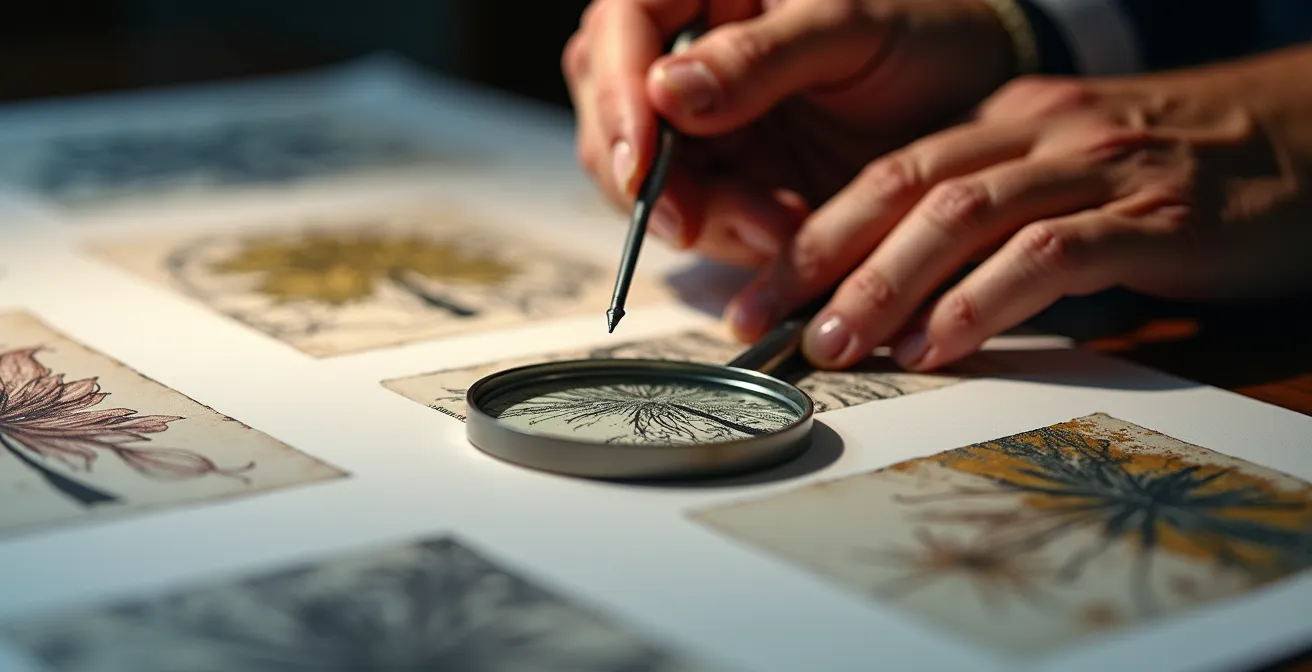
The key to value in prints lies in the edition size. A print from a small, signed edition of 25 is far more valuable than one from an unsigned edition of 500. As a collector, you should prioritize signed and numbered limited editions from reputable artists and publishers. This strategy allows you to build a collection with genuine investment potential without requiring a massive capital outlay.
Case Study: Accessing Established Artists Through Prints
The idea of owning a piece by a museum-quality artist for under $1,000 may seem impossible, but prints make it a reality. For example, on platforms like Rise Art, it’s possible to collect a signed, limited edition print by an established artist like Bruce McLean for under £1,000. This demonstrates a core principle for new collectors: prints offer an accessible entry point to an artist’s market, providing both the joy of ownership and the potential for long-term value appreciation tied to the artist’s established career.
The Risk of Buying “Instagram Famous” Art at Peak Prices
In today’s art market, social media has become a powerful discovery engine, but it is also a source of significant risk for an uninformed collector. An artist can amass hundreds of thousands of followers and generate immense online buzz, leading to a rapid surge in prices. The danger lies in mistaking this social media hype for genuine, sustainable market value. This phenomenon creates speculative bubbles, where prices are driven by fleeting trends rather than by foundational career milestones.
Buying into this hype at its peak is one of the biggest mistakes a new collector can make. The price you pay is for the popularity, not necessarily for the art’s intrinsic or long-term value. When the trend fades, as it often does, the market for that artist’s work can collapse, leaving you with an asset worth a fraction of what you paid. A dramatic example is the artist Yuan Fang, whose 2000% increase in popularity on Artsy.com in 2023 demonstrates the extreme volatility of markets driven by social media amplification.
The antidote to this risk is to prioritize curatorial validation over social media fame. Curatorial validation refers to the endorsement of an artist’s work by the professional art world’s established institutions: respected galleries, museums, critics, and major art fairs. This form of validation is built over years, not weeks, and is a much more reliable indicator of an artist’s long-term significance and market stability. Before acquiring a piece, especially from a trending artist, use a checklist to see if their career has substance beyond the screen.
Your Checklist: Curatorial Validation vs. Social Media Fame
- Museum Exhibitions: Does the artist have solo shows at recognized museums, or are they only featured in online group exhibitions?
- Gallery Representation: Is the artist represented by an established gallery with a strong program (e.g., Gagosian, Pace, White Cube), or primarily by online-only platforms?
- Art Fair Presence: Do they have work featured in premier art fairs like Art Basel or Frieze, which have rigorous selection committees?
- Critical Reviews: Has their work been reviewed or analyzed in serious art publications like Artforum or ArtReview, or is the praise confined to blogs and social media comments?
- Institutional Collections: Are their works held in the permanent collections of major museums or foundations? This is one of the strongest forms of validation.
Timing Your Bid: When to Buy at Auction for the Best Deals?
Auctions can be an excellent place to find value, but the high-pressure environment often leads to emotional decisions and overpaying. A strategic collector does not get caught up in the frenzy. Instead, they understand the psychology of the auction room and use timing to their advantage. The common mistake is to bid early, which only serves to build momentum and drive up the final price for everyone. The smart approach is to be patient, observe, and identify moments of opportunity.
One of the most effective tactics is exploiting the “mid-auction lull.” Auctions are long events, and bidder fatigue is real. The energy is highest at the beginning for star lots and surges again for the final lots. In the middle, however, attention can wane, and competition often thins out. This is your window of opportunity. Works offered during this lull may not attract the same feverish bidding, allowing a prepared bidder to acquire a piece at or even below its low estimate.
This strategy requires preparation. You must do your research beforehand, identify the lots you are interested in, and set a firm maximum price. During the auction, your job is to watch and wait for the activity to slow. When the bidding stalls and the auctioneer is close to closing the lot, that is your moment to enter with a decisive bid. Different times within the auction calendar also present unique opportunities for finding value.
| Timing | Competition Level | Price Premium/Discount | Best For |
|---|---|---|---|
| Opening moments | High | +5-10% premium | Statement pieces only |
| Mid-auction lull | Low | -10-15% discount | Smart acquisitions |
| Pre-closing rush | Very High | +15-20% premium | Must-have pieces |
| Day Sales | Moderate | Market rate | Emerging artists |
| August/January | Low | -20% discount | Value hunting |
Identifying Grants: Where to Find Funding for Cultural Projects?
While the title suggests a focus on artists seeking grants, the savvy collector can interpret “funding for cultural projects” in a different way: by understanding where the ‘smart money’ in the art ecosystem flows. Following the investment patterns of major collectors and institutions provides powerful market signals about which areas of the market are poised for growth. It’s a way of piggybacking on the extensive research and deep pockets of the art world’s most influential players.
Instead of seeking grants, you are seeking data. The most significant trend in recent years has been the massive allocation of capital towards new and emerging artists. This isn’t just a niche interest; it’s a dominant investment thesis. According to a landmark annual report on the art market, high-net-worth (HNW) collectors allocated 52% of their expenditure to works by living artists, with a significant portion dedicated to emerging talent. This is a profound vote of confidence in the future value of contemporary art.
What does this mean for a collector with a $1,000 budget? It means your strategy of focusing on emerging artists is directly aligned with the most powerful currents in the global art market. You are not just bargain hunting; you are participating in the most dynamic and growth-oriented segment of the art world. The “funding” you are looking for is the validation provided by these major market movements. When you see museums acquiring young artists and HNW collectors dedicating over half their spend to them, it confirms that your focus on this area is a sound, data-backed strategy.
This approach transforms you from a passive buyer into a market analyst. You are using the macro trends of cultural funding and high-level investment to inform your micro-level purchasing decisions. This ensures your collection is not built in a vacuum but is instead anchored in the broader economic realities of the art world, maximizing your potential for long-term appreciation.
Gut Feeling or Data Analysis: Which Should Lead Your Strategy?
The age-old debate in art collecting pits emotional connection against cold, hard data. The classic advice is to “buy what you love,” privileging the gut feeling. The modern, data-driven approach focuses on auction records, market trends, and artist metrics. The most successful collectors, however, do not see these as opposing forces. They cultivate an “educated gut”—a powerful synthesis of personal taste and rigorous analysis.
Your gut feeling is your unique curatorial eye. It’s the inexplicable pull you feel towards a certain artist, style, or piece. This is essential, as you must live with the art you collect. However, relying on gut alone is a form of gambling. Data analysis is the framework that disciplines your gut, protecting you from emotional mistakes and validating your instincts. It helps you understand if the price is fair, if the artist has a sustainable career, and if the work has long-term potential beyond your personal affection for it. Recent market conditions have proven the power of this balanced approach; a report noted that while the high-end market declined, sales for works priced at $5,000 or less actually grew, showing that data-informed budget collectors outperformed emotional luxury buyers.
Developing your educated gut is a process of calibration. It involves actively questioning your emotional responses and testing them against objective criteria. A practical way to do this is to create a personal metric that quantifies your emotional connection, forcing you to be honest about your motivations. Is this a piece you would cherish even if its monetary value dropped to zero? This simple question can separate a true collection piece from a speculative purchase.
Your Checklist: The Post-Purchase Joy Metric Assessment
- Score the Piece (1-10): Before buying, ask yourself: on a scale of 1 to 10, how happy would I be to own this piece if I knew it would lose all its monetary value tomorrow?
- Analyze the Score (Below 7): If your score is 6 or below, you should reconsider. This indicates your interest is primarily speculative, not holistic. This is not collecting; it’s gambling.
- Analyze the Score (7-8): This is the sweet spot. It signifies a healthy balance between a strong emotional connection and a reasonable consideration for the work’s financial potential.
- Analyze the Score (9-10): This is a perfect collection piece. Your connection is so strong that any financial appreciation is purely a bonus. These are the works that will form the core of your collection.
- Track Your Scores: Keep a record of your scores over time. This data will help you understand your own taste and calibrate your “educated gut,” making you a smarter, more confident collector.
Key Takeaways
- Collecting on a budget is an active strategy, not passive shopping; focus on emerging artists and limited edition prints for the best entry points.
- Validate every purchase with objective criteria: check for provenance, curatorial validation, and market signals to avoid speculative bubbles.
- Develop an “educated gut” by balancing your emotional response with data analysis to build a collection that is both personally meaningful and financially sound.
How to Network at Art Fairs Without Being an Expert?
Art fairs are the epicenters of the art world, but for a new collector, they can be overwhelming and intimidating. The key to navigating them successfully is to arrive with a strategy. Your goal is not to see everything, but to make meaningful connections and gather information. The biggest mistake beginners make is leading with their budget, which can signal a lack of seriousness. Instead, your approach should be one of genuine, educated curiosity about the gallery’s program and artists.
A powerful technique to break the ice is the “One-Piece Deep Dive.” Instead of flitting from booth to booth, choose one artwork that genuinely intrigues you and use it as a conversation starter. Approach the gallerist not with “How much is this?” but with an open-ended question like, “Could you tell me more about this artist’s process?” or “I’m interested in this piece; what’s the story behind it?” This positions you as a thoughtful observer, not just a bargain hunter. Joining a guided tour of the fair is also an excellent way to learn and feel more comfortable asking questions.
The One-Piece Deep Dive Conversation Starter
As the Affordable Art Fair suggests, joining a tour or focusing on one piece can transform your experience. You may find yourself drawn to a particular artist, style, or medium once you learn about the inspiration or story behind the work. This focused approach makes conversation easier and more natural. A gallerist is far more likely to engage with someone who shows a real interest in the art itself, which can lead to discovering other works by the artist that are within your budget, often kept in the back room and not on public display.
Effective networking is about building long-term relationships, not making a one-time transaction. A gallerist can become your most valuable advisor, but you must earn their time and respect. This requires a professional and strategic approach, from your preparation before the fair to your follow-up afterward.
Your Checklist: Art Fair Navigation Strategy for Beginners
- Pre-Fair Preparation: Before you go, study the exhibitor list online. Identify 5-10 galleries that feature artists or styles you like and that align with your budget range.
- Opening Approach: Your opening line should be, “I’m new to your gallery and I’m learning about your program.” This is respectful and invites a conversation. Avoid starting with, “What do you have for under $1,000?”
- Ask Smart Questions: Inquire about the artist’s recent exhibitions, their upcoming shows, or the specific techniques used in the work. Show you’ve done some homework.
- Follow-Up Protocol: If you have a good conversation, ask for a business card. Send a brief, polite email within 48 hours, referencing the specific work you discussed to refresh their memory.
- Relationship Building: Sign up for the gallery’s newsletter and follow them on social media. Attend their gallery openings if you can. This demonstrates a sustained interest and is the foundation of a real collector-gallery relationship.
Ultimately, starting an art collection is the first step in building a deeply personal and potentially valuable asset. By applying these strategic frameworks, you transform from an intimidated spectator into a confident participant in the cultural conversation. The next logical step is to begin your research and identify the first piece for your new collection.