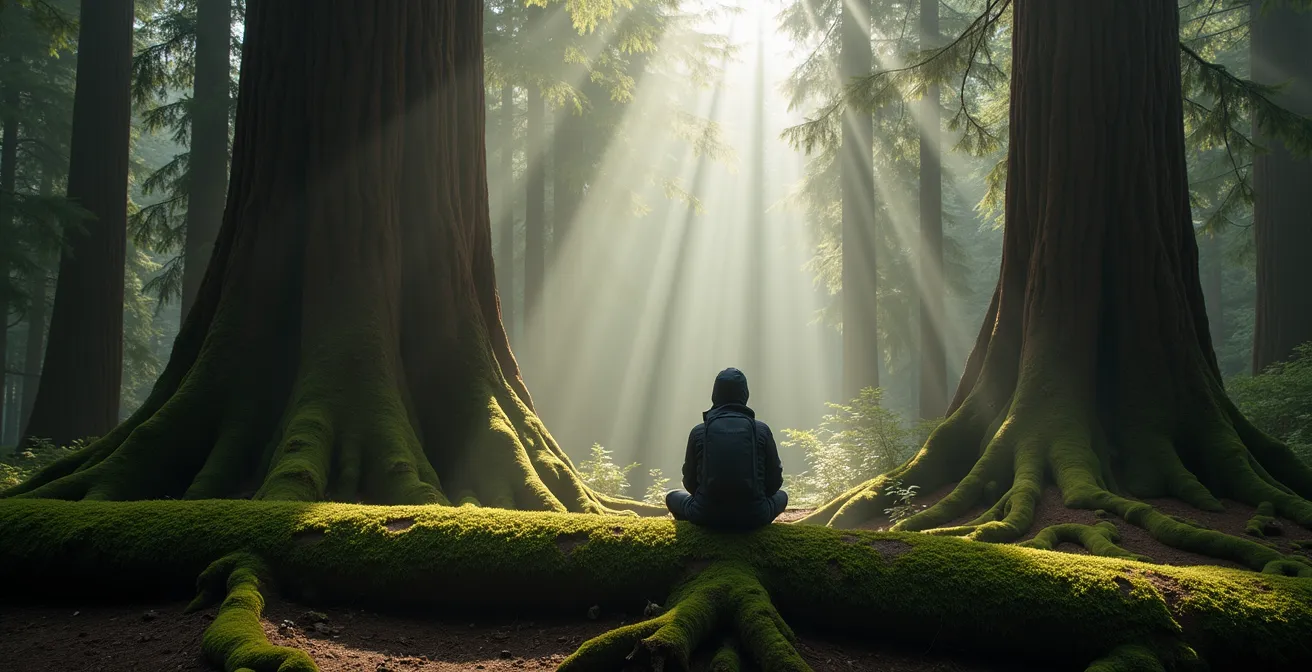
A true forest bathing trip isn’t a passive stroll; it’s an active practice to recalibrate a stressed urban nervous system. This guide reframes the experience from a simple walk into a targeted, science-backed intervention. You’ll learn the physiological mechanisms that drive stress reduction, how to prepare for maximum restorative benefit, and why developing environmental competence is the key to lasting mental peace.
The constant hum of the city, the endless notifications, the pressure to always be “on”—for many urban dwellers, this state of high alert has become the new normal. You might feel a persistent sense of disconnection, a nagging fatigue that sleep doesn’t fix. This is often called “nature deficit disorder,” a profound sense of imbalance from a life lived too far from the green, quiet spaces that our biology craves. The common advice is to simply “get out into nature,” to take a walk in the park. But often, these brief excursions feel superficial, failing to truly penetrate the armor of chronic stress.
What if the key wasn’t just *being* in nature, but actively and intentionally *engaging* with it? The ancient Japanese practice of Shinrin-yoku, or forest bathing, offers a powerful framework. But this is more than just a mindful walk. The true power of forest bathing lies in understanding it as a method for a deep physiological reset. It’s about consciously using the forest environment to downshift your autonomic nervous system from a state of fight-or-flight to one of rest-and-digest. It is an active practice of sensory engagement designed to produce measurable changes in your body and mind.
This guide moves beyond the surface-level advice. We will explore the science behind how nature immersion systematically lowers stress markers, provide practical frameworks for everything from packing to finding true solitude, and even touch on how learning basic outdoor skills can profoundly reduce day-to-day anxiety. This is your roadmap to planning a forest bathing trip that doesn’t just offer a temporary escape, but initiates a genuine mental and physical recalibration.
To help you navigate this journey, this article is structured to build your knowledge from the foundational science to advanced practices. The following sections will guide you step-by-step in crafting a truly restorative experience.
Summary: Your Guide to Planning a Restorative Forest Bathing Trip
- Why 3 Days in Nature Lowers Your Stress Markers by 50%
- How to Pack for a Day Hike Without Overloading Your Back?
- Hiking vs Glamping: Which Experience delivers Better Restoration?
- The Weather Mistake That Turns a Nature Walk into a Nightmare
- Optimizing Your Visit: Finding Solitude in National Parks
- Foraging Myths: The Danger of “Look-Alike” Mushrooms
- Why a Low HRV Score Indicates You Are Close to Illness
- Why Learning Bushcraft Skills Reduces Daily Anxiety?
Why 3 Days in Nature Lowers Your Stress Markers by 50%
The feeling of calm that washes over you in a forest is not just a poetic notion; it’s a cascade of measurable physiological events. Your body, accustomed to the high-alert state of urban life, begins a profound nervous system recalibration. The most significant of these changes involves cortisol, the primary stress hormone. Immersing yourself in a forest environment for a sustained period sends a powerful signal to your adrenal glands to slow down. In fact, compelling research shows that a multi-day forest bathing intervention can lead to a remarkable 47% reduction in salivary cortisol levels, demonstrating a powerful and direct impact on your stress biology.
This hormonal reset is just the beginning. The benefits compound over time, creating a timeline of restoration. Within the first day, your parasympathetic nervous system—the “rest and digest” network—is activated, leading to a reduced heart rate. By the second day, this stabilization contributes to significant improvements in sleep quality. It’s on the third day that many people experience peak benefits: not just the lowest cortisol levels, but also enhanced cognitive functions like creative problem-solving. The effects are also surprisingly durable. Studies on two-day forest bathing programs found that participants saw a significant increase in anti-cancer proteins and immune cells, with these positive effects lasting for at least seven days after the trip.
This cumulative effect is why a longer immersion is so much more powerful than a brief walk. It gives your body the necessary time to move beyond initial relaxation and into a state of deep, systemic recovery. The process unfolds as follows:
- Day 1: Initial parasympathetic nervous system activation and reduced heart rate.
- Day 2: Significant improvement in sleep quality and the beginning of Heart Rate Variability (HRV) stabilization.
- Day 3: Peak cortisol reduction and enhanced creative problem-solving abilities.
- Beyond Day 3: Sustained stress reduction and a continued elevation of natural killer cells, boosting immune function long after you’ve left the forest.
How to Pack for a Day Hike Without Overloading Your Back?
When preparing for a forest bathing trip, the goal is to facilitate mindfulness, not to prepare for a grueling expedition. The weight on your back directly impacts the state of your mind. A heavy, cluttered pack creates physical strain and mental distraction, pulling you out of the present moment. The key is to shift your packing philosophy from “just in case” to “just what’s essential for sensory engagement.” Every item should serve the purpose of enhancing your connection with nature, not insulating you from it.

As the image above illustrates, mindful packing is an exercise in intentionality. Instead of heavy electronics, consider a lightweight journal. Instead of a large lunch, pack a thermos of herbal tea to encourage slow, contemplative sips. The goal is to keep your total pack weight under 10% of your body weight for maximum comfort. This isn’t just about physical ease; it’s about creating a mental state of lightness and freedom. The essentials should focus on comfort and sensory enhancement, not survival for every possible scenario.
Here is a list of essentials for a mindfulness-focused pack:
- Sensory Enhancement Items: A small, waterproof sit-pad for comfortable meditation on damp ground, a lightweight journal and pencil, and a thermos with your favorite herbal tea.
- Essential Layers: A moisture-wicking base layer, an insulating mid-layer like fleece, and a packable waterproof/windproof shell. These three layers can be adapted to almost any condition.
- Mindful Tools: Your phone, but silenced and in airplane mode to be used only as a camera or for emergencies. A small first aid kit, and sufficient water (a good rule of thumb is 1 liter for every 2 hours of slow walking).
- What to Leave Behind: Redundant “just-in-case” gear, heavy books or tablets, and excessive food that requires complex preparation.
Hiking vs Glamping: Which Experience delivers Better Restoration?
As you plan your nature retreat, you’ll encounter a fundamental choice between active and passive immersion. Is it better to challenge your body with a vigorous hike or to relax in the comfort of a glamping setup? The answer depends entirely on the type of restoration your nervous system needs. As experts from the Stanford Longevity Center note, the two activities serve very different, though equally valuable, purposes.
While hiking focuses on the improvement of physical fitness, forest bathing fosters improved mental and emotional health.
– Stanford Longevity Center, Stanford Medicine Research
Hiking is an active restoration process. The physical exertion, elevated heart rate, and focus required to navigate a trail are excellent for combating mental rumination and anxiety. It generates dopamine and endocannabinoids, creating a sense of accomplishment and a “runner’s high” that can effectively break cycles of negative thought. Glamping, on the other hand, represents passive restoration. It is designed for deep rest and recovery from physical burnout. By providing comfort and security, it allows the nervous system to fully enter a state of relaxation without the added stress of physical challenge.
The most effective approach is often to combine them. You might plan a trip that includes active days of hiking or exploration balanced with periods of passive rest. Understanding the distinct benefits of each, as detailed in the comparative analysis from Stanford researchers, allows you to tailor your experience to your specific needs.
| Restoration Type | Best For | Key Benefits | Stress Reduction |
|---|---|---|---|
| Active (Hiking) | Mental rumination, anxiety | Dopamine release, endocannabinoid activation | 40-50% cortisol reduction |
| Passive (Glamping) | Physical burnout, nervous system recovery | Deep rest, comfort-based recovery | 25-35% cortisol reduction |
The Weather Mistake That Turns a Nature Walk into a Nightmare
The single biggest weather-related mistake in planning a forest bathing trip isn’t getting caught in the rain; it’s avoiding it altogether. Many people cancel their plans at the first sign of a cloudy sky, believing that only perfect, sunny days are suitable for nature immersion. This is a fundamental misunderstanding of how the forest environment works. From a Shinrin-yoku perspective, there is no “bad” weather, only different types of sensory experiences. Embracing so-called “bad” weather can actually deepen your practice and enhance the physiological benefits.
For instance, a light rain or morning mist dramatically enhances the forest’s scents, leading to a more potent release of phytoncides—the aromatic compounds released by trees that are linked to boosted immune function. Furthermore, these less-than-perfect days offer a significant practical advantage: fewer crowds. A trail that is bustling on a sunny Saturday can be a haven of solitude on a misty Tuesday morning. The goal is not to endure discomfort, but to adapt intelligently. This means checking microclimate conditions (forests are often 5-10°F cooler than surrounding areas) and dressing in layers that can be adjusted every 20 minutes to maintain perfect thermal comfort. Consistency is more important than intensity; aiming for the 120 minutes per week minimum recommended by researchers means learning to work with the weather, not against it.
To transform weather from a potential obstacle into an ally, consider these adaptation strategies:
- Embrace the Elements: View light rain as a mindfulness opportunity. Notice the sound of drops on leaves and the smell of damp earth.
- Plan for the Golden Hours: The hours around dawn (6-8am) and dusk (5-7pm) offer not just beautiful light but also gentler temperatures and increased wildlife activity.
- Layer for Micro-Adjustments: The key to comfort is not a single heavy jacket but a system of layers you can add or remove to stay in a state of perfect balance.
- Seek Out Light Rain: Intentionally visit during or just after a light rain to experience the forest with fewer people and heightened sensory input.
Optimizing Your Visit: Finding Solitude in National Parks
For a stressed urban dweller, the promise of nature can be shattered by the reality of crowded parking lots and busy trails. Finding genuine solitude is essential for a true physiological reset, as the presence of other people can keep our nervous systems in a state of low-grade social vigilance. The good news is that you don’t need to travel to a remote wilderness to find it. Even in bustling urban parks like New York’s Central Park, solitude is achievable with the right strategy. The key is to think like a contrarian, moving against the predictable flows of human traffic.
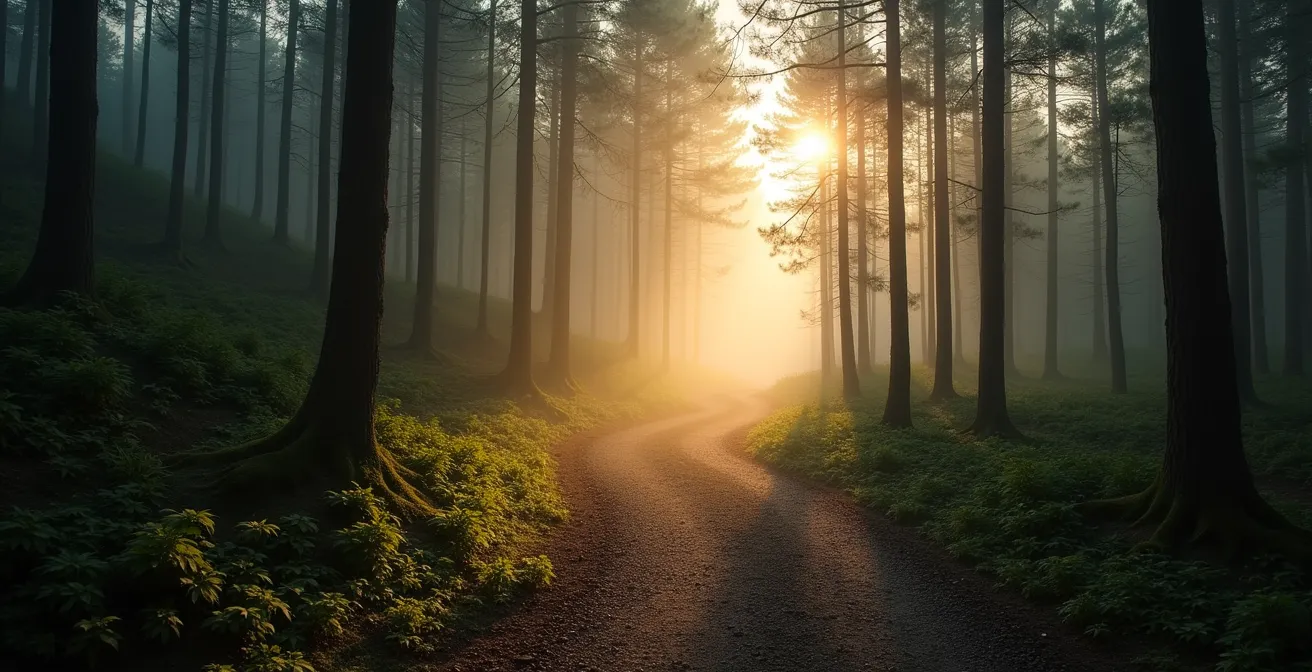
The vast majority of visitors to any park, urban or national, stick to a predictable pattern: they arrive mid-day on weekends and stay within a 10-minute walk of the main parking areas and attractions. Simply by violating these unwritten rules, you can find quiet. Walking just 15 minutes away from a parking lot can feel like entering a different world. Seeking out the smaller, less-trafficked connector trails between major routes often leads to completely empty paths. As studies on urban forest bathing show, you can achieve significant well-being benefits in as little as 17 minutes a day in a natural setting, provided you can find a pocket of peace.
Adopting a temporal contrarian strategy is the most powerful tool for securing this peace. It involves timing your visit to avoid the peak crowds, which simultaneously enhances your experience by offering better light and more wildlife activity.
Your Action Plan for Finding Solitude
- Visit on Weekdays: Plan your trip for a weekday afternoon, between 2-4 PM, when most people are at work or school.
- Embrace the Early Morning: Arrive at the park before 7 AM on a weekend to guarantee at least an hour or two of near-total solitude.
- Use Weather to Your Advantage: A day with light rain or mist can reduce the number of visitors by up to 80%, transforming a popular park into a private sanctuary.
- Go the Extra 15 Minutes: Make a conscious effort to walk for at least 15 minutes away from the parking area or main entrance before you begin your practice.
- Seek Connector Trails: Use a map to identify the small, unnamed trails that link the main paths. These are almost always the quietest areas in the park.
Foraging Myths: The Danger of “Look-Alike” Mushrooms
As you deepen your connection with the forest, you may feel a natural pull to interact with it more directly through foraging. However, this is an area where caution is paramount. The romantic idea of gathering wild mushrooms can quickly become a dangerous reality due to “look-alike” species, where a harmless edible mushroom has a highly toxic twin. For anyone but a seasoned expert, the risks of misidentification far outweigh the rewards. For this reason, the guiding principle of foraging during a forest bathing practice should be observation, not consumption.
Instead of harvesting, use the incredible diversity of fungi as a tool for mindfulness. The intense focus required to notice the subtle differences in pattern, color, and texture of various mushrooms creates a powerful meditative state. This practice of deep looking quiets the mind and fosters a profound appreciation for the complexity of the forest ecosystem. It transforms the desire to “take” from nature into an opportunity to “receive” its lessons in a much safer way.
This doesn’t mean you must abandon the satisfaction of foraging altogether. There are numerous safe and easily identifiable alternatives that can provide the same sense of connection and environmental competence. For example, gathering pine needles for a fragrant tea (avoiding Yew trees), or identifying wild mint, wood sorrel, or dandelion leaves are excellent ways to practice. These plants are distinctive and lack dangerous look-alikes, making them perfect for beginners. This approach allows you to engage your senses and the satisfying hunter-gatherer instinct without any of the associated risks, enhancing the mental reset experience by grounding you fully in the present moment.
Why a Low HRV Score Indicates You Are Close to Illness
While stress can feel like an abstract emotional state, its effects on your body are concrete and measurable. One of the most powerful biomarkers for tracking your stress levels and overall resilience is Heart Rate Variability (HRV). HRV is not your heart rate, but rather the measurement of the variation in time between each of your heartbeats. A high HRV is a sign of a healthy, resilient, and adaptable nervous system, capable of shifting easily between states of alertness and relaxation. A low HRV, conversely, indicates that your system is stuck in a state of stress (sympathetic dominance), making you more susceptible to everything from burnout to illness.
This is where forest bathing demonstrates its profound power as a medical intervention. The practice directly stimulates the vagus nerve, the primary nerve of the parasympathetic (“rest and digest”) nervous system. This stimulation is what helps your body regain its “variability” and bounce back from stress. Studies have shown that forest therapy can significantly increase parasympathetic activity while reducing sympathetic drive, a change that is directly reflected in improved HRV scores. In fact, research from the University of Derby has quantified this effect, showing an average 12% improvement in HRV after nature immersion.
Tracking your HRV with a wearable device before and after a forest bathing trip can be a powerful motivator. It transforms the subjective feeling of being “more relaxed” into objective data. Seeing your HRV score climb is tangible proof that you are actively improving your physiological resilience and moving away from a state of chronic stress. It provides concrete evidence that your time in the forest is not just a pleasant activity, but a vital practice for maintaining your long-term health and well-being.
Key Takeaways
- Forest bathing is an active physiological process that measurably lowers stress hormones like cortisol, not just a relaxing walk.
- The quality of your immersion, achieved through mindful preparation and finding true solitude, is more critical than the duration of your trip.
- Developing environmental competence through skills like safe foraging or basic bushcraft builds lasting resilience against anxiety by fostering self-acceptance.
Why Learning Bushcraft Skills Reduces Daily Anxiety?
While the quiet contemplation of forest bathing is profoundly restorative, another powerful path to reducing anxiety lies in actively developing skills within the natural environment. Learning basic bushcraft—such as how to tie essential knots, start a fire with a ferro rod, or build a simple shelter—may seem like a niche hobby, but it functions as a potent form of mindfulness and anxiety reduction. The core of anxiety is often a feeling of helplessness in the face of uncertainty. Developing environmental competence directly counters this feeling.
When you engage in a task like carving a feather stick or purifying water, your prefrontal cortex—the part of the brain responsible for rumination and worry—quiets down. You enter a “flow state” where your mind is completely absorbed in the sensory-motor task at hand. This is not an escape from reality, but a deep engagement with it. The repetitive, focused actions are meditative, and the successful outcome of creating a fire or a secure knot provides an immediate and tangible sense of accomplishment. This process transforms abstract anxiety into concrete preparedness, shifting your mindset from “what if?” to “I can handle this.” As mental health experts point out, this form of sensory engagement is a powerful way to build resilience.
Self-acceptance and emotional resilience are critical in behavioral health treatments, and this sensory engagement can help cultivate both.
– HUPC Florida Mental Health Center, Nature’s Cure: Mental Health Benefits Study
Starting with small, achievable skills builds a foundation of confidence that extends far beyond the forest. Mastering a simple bowline knot or successfully starting a fire in damp conditions teaches problem-solving and self-reliance, which are powerful antidotes to the anxieties of modern urban life. It’s a reminder that you are a capable, adaptable being, connected to a world far older and more fundamental than your daily stressors.
Your journey toward nervous system recalibration doesn’t require a grand expedition or advanced expertise. It begins with a single, intentional step. Start by planning a simple two-hour visit to a local park or green space, applying these principles of mindfulness and active engagement to transform a simple walk into a powerful act of self-care.