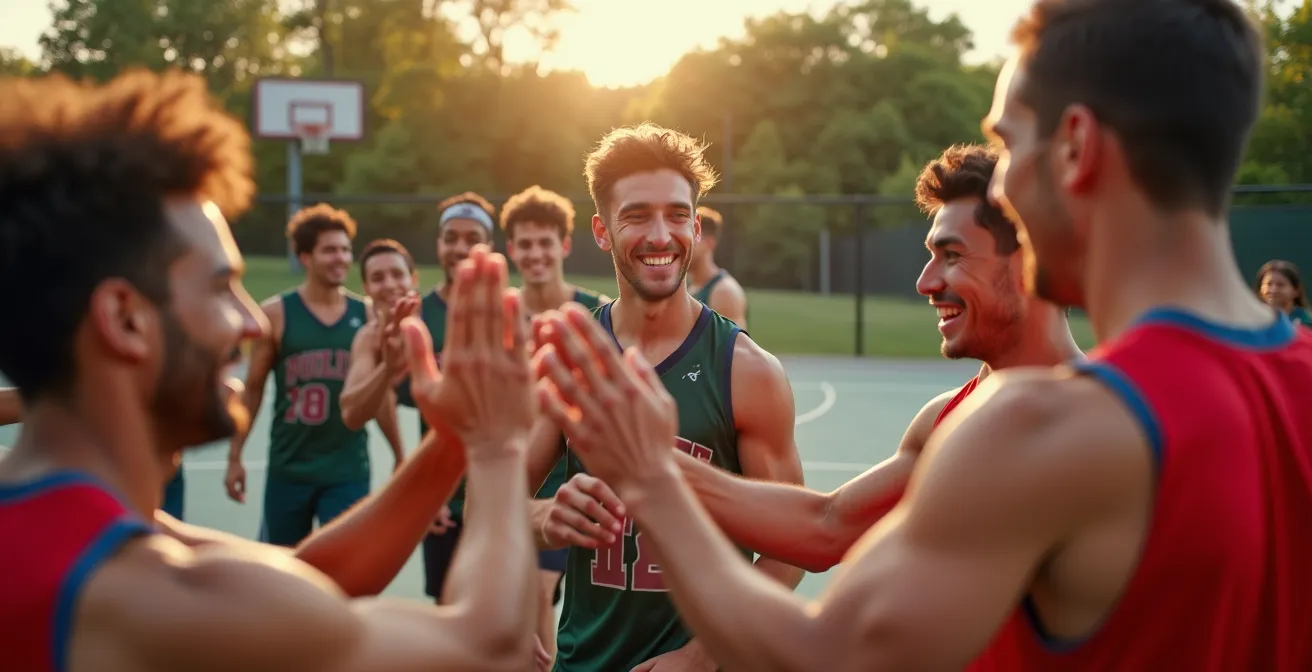
The fastest way to build genuine friendships as an adult isn’t through awkward networking events, but by strategically using team sports to create bonds forged by shared effort.
- The stress and success of a game trigger neurochemicals like oxytocin, creating authentic connections faster than casual conversation.
- Choosing the right league (casual vs. competitive) and preparing your body are critical steps to ensure you stay in the game, both physically and socially.
Recommendation: Instead of just picking a sport you like, choose a league based on its social culture and your personal friendship goals.
Moving to a new city or simply watching your social circle shrink as an adult can feel incredibly isolating. The common advice—”join a book club,” “go to meetups,” “try a new hobby”—often leads to a series of polite but superficial conversations that rarely blossom into real friendship. You might know someone’s name and what they do for a living, but you don’t really know them. The structured pressure of traditional social settings can feel draining, especially for those who are more introverted.
Many articles suggest sports as a solution, but they stop at the obvious: “join a soccer team.” This misses the fundamental reason why sports are so uniquely powerful for adult social development. It’s not just about being in the same place at the same time. It’s about leveraging a unique environment of structured interaction and shared goals to accelerate trust and camaraderie. The key isn’t just participating; it’s understanding the underlying mechanics of how these groups form bonds.
But what if the real secret wasn’t just showing up to play, but strategically choosing the right environment where friendship is a core part of the game’s design? This guide goes beyond the surface-level advice. We’ll explore the science of why shared struggle on a court or field creates deeper connections than a happy hour. We’ll give you a practical framework for choosing a league that matches your social goals, preparing your body to avoid friendship-ending injuries, and navigating game day in a way that feels natural, even for an introvert. This is your playbook for turning teammates into a true social circle.
This article provides a complete roadmap, from understanding the psychology of team bonding to choosing the right club and staying injury-free. Explore the sections below to build your strategy.
Summary: The Ultimate Guide to Forging Adult Friendships Through Team Sports
- Why Shared Struggle Creates Bonds Faster Than Happy Hour
- How to Find the Right Amateur League for Your Skill Level?
- Competitive vs Casual: Which League Style Fits Your Schedule?
- The “Weekend Warrior” Injury That Sidelines Players for Months
- Preparing for the Season: A 4-Week Ramp-Up Plan for Desk Workers
- Why Structured Socializing Is Easier for Introverts Than Parties
- The Mistake of Ignoring Joint Pain That leads to Chronic Injury
- How to Choose a Hobby Club That Actually Leads to Friendship?
Why Shared Struggle Creates Bonds Faster Than Happy Hour
The typical after-work happy hour is a minefield of small talk. You discuss the weather, your commute, and what you do for a living, but these conversations rarely build genuine connection. Team sports operate on a completely different psychological level. When you’re on a team, you’re not just co-existing; you’re engaged in a shared struggle toward a common goal. This dynamic—the collective effort, the mutual reliance, the shared highs of a victory and the lows of a defeat—is a powerful catalyst for bonding.
This isn’t just a feeling; it’s neurochemistry at work. The physical exertion and collaborative nature of team sports trigger a cocktail of powerful bonding chemicals in your brain. For instance, new research shows that oxytocin increases cardiac activity during team play. Often called the “bonding hormone,” oxytocin fosters trust and camaraderie. It’s the same chemical that bonds mothers to their babies and partners to each other. When you and a teammate successfully execute a play or support each other after a mistake, your brains are getting a dose of this powerful social glue.
The Neurochemical Cocktail of Team Competition
In team sports, shared experiences and collaboration are key triggers for oxytocin release. The trust and camaraderie that develop among athletes contribute significantly to the overall happiness felt during participation. These bonds cultivate a sense of belonging and mutual support, which fundamentally enhances a player’s emotional well-being and turns a group of strangers into a cohesive unit.
Every game creates a story. The funny mistake that turns into an inside joke, the come-from-behind victory, the shared frustration over a bad call—these become collective narrative memories. Unlike the forgettable chatter of a party, these moments are emotionally charged and create a unique group identity. You’re not just “people who know each other”; you’re “the team that almost won the championship that one year.” This shared history is the bedrock of authentic friendship.
How to Find the Right Amateur League for Your Skill Level?
Jumping into a league that’s a bad fit is a fast track to frustration, not friendship. If you’re a beginner in a hyper-competitive league, you’ll feel intimidated. If you’re an experienced player in a purely for-fun league, you might feel bored. The key is to find a league where the culture and skill level align with your primary goal: building a social circle. This requires a little “social scouting” before you commit.
Don’t just sign up blindly online. If possible, go watch a game of the league you’re considering. Observe the sidelines. Are people laughing and joking, or are they intensely focused and silent? Do teams interact positively with their opponents? A league where players from opposite teams hang out after the game is a strong indicator of a healthy social culture. The goal is to find an environment where the game is the activity, but connection is the purpose.
Most leagues offer different ways to join. As someone new to an area, signing up as a “free agent” is often the best strategy. You’ll be placed on a team with other individuals or small groups, which forces social interaction from day one. It’s a built-in way to meet a dozen new people instantly. While joining with a few friends is an option, it can sometimes create in-groups that are harder for others to break into. As a free agent, everyone on your team is in the same boat, making it easier to build connections from scratch.
Your Action Plan: Scouting for a Friendship-Focused League
- Spectator Reconnaissance: Attend a game first. Observe the sideline dynamics: Are players laughing and encouraging each other? This reveals the league’s true vibe.
- Post-Game Culture Check: Find out if teams have a designated sponsor bar or regularly gather after games. This “third place” is where friendships are solidified.
- Opponent Interaction: Watch how opposing teams interact. Friendly banter and post-game handshakes are signs of a positive, non-toxic environment.
- Free Agent Integration: Ask the league coordinator how they place free agents. Good leagues are intentional about integrating new players into teams to foster a welcoming atmosphere.
- Communication & Vibe: Read the league’s website and social media. Do they emphasize fun, community, and social events, or just scores and standings? The language they use is a huge clue.
Ultimately, you’re not just looking for a place to play a sport; you’re looking for a community. Finding the right one requires looking beyond the game itself and evaluating its potential for fostering the connections you seek.
Competitive vs Casual: Which League Style Fits Your Schedule?
Once you’ve identified potential sports, the next critical decision is choosing between a competitive or a casual league. This choice directly impacts not only your time commitment but also the nature of the social dynamics you’ll encounter. There’s no right or wrong answer; the best fit depends entirely on your personality, schedule, and what you hope to get out of the experience. Understanding the trade-offs is key to making a choice that leads to friendship, not burnout.
As ProRec Athlete research notes in its analysis, “Social sports are adult recreational sports leagues where there is just as much emphasis on socializing as there is on the sport itself.” This definition perfectly captures the essence of a casual, or “bar-first,” league. Here, the competition is secondary to the fun. The time commitment is typically low—maybe one game a week—and the main event is often the post-game gathering at a sponsor bar. This is a low-pressure environment ideal for building wide, relaxed social networks.
Competitive leagues, on the other hand, demand more. They may involve multiple practices or games per week and a greater focus on winning and skill development. While the time commitment is higher, the bonds formed can be incredibly strong. Friendship becomes a byproduct of a shared, intense passion. The sweet spot for many adults looking for lasting friendships is the hybrid “Comp-Social” league. These leagues strike a balance: the games are taken seriously, but the post-game socializing is still an integral part of the experience. This model provides both the bonding power of shared struggle and the relaxed environment needed to let those bonds deepen.
To help you decide, consider this framework adapted from an analysis of the best social sports, which can help you align your personal goals with the right league type.
| League Type | Time Commitment | Primary Goal | Social Dynamic |
|---|---|---|---|
| Bar-First Social | 1-2 hours/week | Socializing is always definitely part of the experience, with post-game pub gatherings | Very casual, emphasis on fun |
| Comp-Social (Hybrid) | 2-3 hours/week | Balance of competition and socializing | Sweet spot for lasting friendships |
| Competitive | 3-5+ hours/week | Winning and skill development | Friendship as byproduct of shared passion |
Choosing the right league style is about being honest with yourself. Do you want a relaxed way to meet many people, or a more intense experience that forges fewer, but potentially deeper, bonds? Aligning your expectations with the league’s culture from the start is the best way to ensure a positive social outcome.
The “Weekend Warrior” Injury That Sidelines Players for Months
There is nothing that derails a budding social life faster than an injury. You finally find a great team, you’re starting to connect with people, and then—a pulled hamstring, a twisted ankle, a torn ACL. Suddenly, you’re not at the games or the post-game hangouts. You’re on the couch, isolated again. For adults who spend their weekdays at a desk, the risk of becoming a “weekend warrior” casualty is incredibly high. Your body isn’t accustomed to the explosive, dynamic movements required by most sports.
The transition from a sedentary work life to athletic activity is a shock to the system. Muscles, tendons, and ligaments that are tight and underused are suddenly asked to sprint, jump, and pivot. This is a recipe for disaster. The most common injuries—strains in the hamstrings and calves, ankle sprains, and knee ligament damage—often happen not because of a dramatic collision, but from a simple, unprepared movement. A sudden sprint to catch a ball or an awkward landing can be all it takes to sideline you for weeks or even an entire season.
This is why proper preparation is not just about performance; it’s about protecting your social investment. An ounce of prevention is worth a pound of cure, and in this case, the cure is often lonely and prolonged. Taking the time to warm up properly, listen to your body, and gradually ramp up your activity level is essential. It’s the difference between being a reliable teammate who shows up every week and being a cautionary tale.

As the image above illustrates, preparing your muscles for athletic stress is a crucial step. The contrast between a prepared, flexible muscle and a cold, tight one is the difference between a season of fun and a season of physical therapy. Don’t let a preventable injury be the reason your new social life gets put on hold. Your future friends are counting on you to be on the field with them.
Preparing for the Season: A 4-Week Ramp-Up Plan for Desk Workers
Jumping off the office chair and onto the field without preparation is a surefire way to get injured and miss out on the social connections you’re trying to build. For the desk worker, a gradual “ramp-up” period is non-negotiable. It’s about waking up dormant muscles and preparing your body for the specific demands of your chosen sport. This proactive approach not only prevents injury but also builds confidence, allowing you to focus on having fun and connecting with your teammates rather than worrying about pulling a muscle.
The goal is to progressively increase the intensity and specificity of your training over a month. Start with the basics: mobility and foundational strength. Your hips, shoulders, and ankles get incredibly tight from sitting all day, so daily mobility flows are essential. From there, you can layer in bodyweight exercises to build a solid base. Only in the final weeks should you introduce higher-intensity interval training and sport-specific movements. This gradual progression gives your body time to adapt, making it far more resilient to the stresses of game day.
This preparation also sends a powerful social signal. When you show up prepared, you’re showing your future teammates that you’re reliable and invested. It lays the groundwork for trust. As one case study on the topic notes, working together towards common goals and supporting each other through challenges are what translate into strong relationships off the field. Your personal preparation is the first step in contributing to that shared goal.
This 4-week progressive training plan is designed specifically for desk workers to safely prepare for a season of social sports.
4-Week Progressive Training Plan for Desk Workers
- Week 1 (Mobility Focus): Perform 5-minute mobility flows daily, even at your desk. Concentrate on opening up your hip flexors, mobilizing your thoracic spine, and rotating your ankles and shoulders.
- Week 2 (Build a Base): Three times a week, complete 15 minutes of bodyweight basics. This includes squats, lunges, push-ups, and planks to activate major muscle groups.
- Week 3 (Introduce Intensity): Twice a week, perform a 20-minute interval training session. This could be alternating 30 seconds of sprinting with 60 seconds of walking or jogging to build cardiovascular endurance.
- Week 4 (Sport-Specific Drills): Practice movements related to your sport. Incorporate short sprints, lateral shuffles, and change-of-direction drills to prepare your body for the dynamic nature of the game.
- The Final 48 Hours: Focus on hydration and nutrition. Aim to drink half your body weight in ounces of water daily and eat balanced meals with carbohydrates for energy and protein for muscle repair.
By following a structured plan, you’re not just training your body; you’re setting the stage for a successful and socially fulfilling season. You’re building the physical foundation for your new social life.
Why Structured Socializing Is Easier for Introverts Than Parties
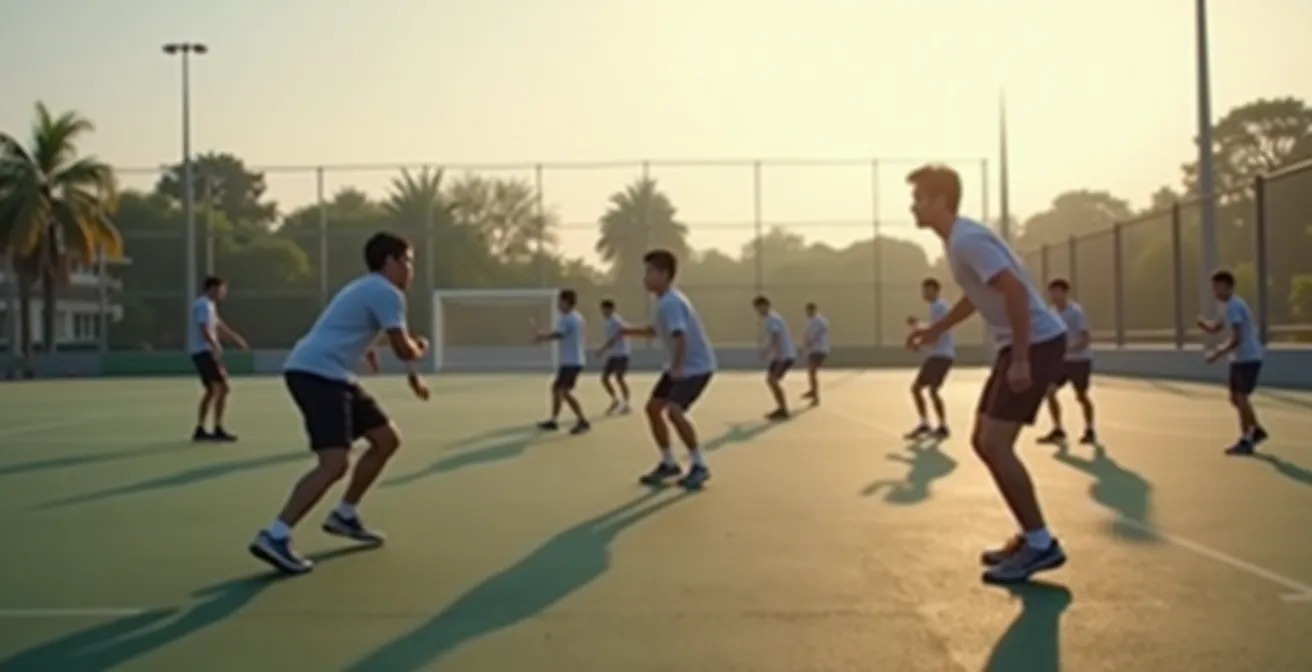
For many introverts, the thought of a party or a networking event is exhausting. The pressure of initiating open-ended conversations with strangers can feel like a performance. Team sports, however, offer a completely different and far more comfortable social paradigm: structured socializing. The game itself provides a framework for interaction, removing the burden of having to constantly think of something to say. The focus is on a shared activity, not on the conversation itself.
This “parallel play” for adults allows connections to form organically. You can be part of a group, contributing and connecting, without the need for constant verbal engagement. A high-five after a good play, a quick word of encouragement (“nice pass!”), or simply working together to defend your goal are all forms of social connection. These are low-pressure interaction points that build camaraderie over time. The game is the social lubricant, making it easier to be around people without feeling drained.
The built-in regularity of a league is another huge advantage for introverts. Weekly practices and games ensure you see the same people repeatedly. This consistency is the magic ingredient for turning acquaintances into friends. You don’t have to muster the energy for a one-off social blitz; instead, relationships can develop at a natural, comfortable pace. You start to recognize faces, learn names, and eventually, the in-game chatter spills over into pre-game and post-game conversations. It’s a slow burn, which is often the preferred temperature for introverted friendship-building.
Even the post-game hangout is less intimidating. You’re not walking into a room of strangers; you’re gathering with people you just shared an experience with. You have a built-in, easy topic of conversation: the game you just played. The “Introvert’s Social Playbook” is simple: start with a game-related opener (“Have you played in this league before?”), offer non-verbal support during the game, and end with a low-commitment closer (“Great game, see you next week!”). This approach allows you to build social capital without depleting your energy reserves.
The Mistake of Ignoring Joint Pain That leads to Chronic Injury
In the excitement of a new team and the desire to be a reliable player, it’s tempting to push through pain. You don’t want to let your new friends down. However, ignoring the signals your body is sending is one of the biggest mistakes an adult athlete can make. The social pressure to “tough it out” can lead you to turn a minor issue into a chronic, season-ending injury, effectively severing the very social ties you were trying to strengthen. The smart, reliable teammate isn’t the one who plays through injury; it’s the one who takes care of their body to be there for the long haul.
A crucial skill is learning to differentiate between “good pain” and “bad pain.” Good pain, like Delayed Onset Muscle Soreness (DOMS), is a dull ache that appears 24-48 hours after a tough workout. It’s a sign your muscles are adapting and getting stronger. Bad pain is different. It’s often sharp, stabbing, or localized near a joint. It’s a warning sign that something is wrong. Pushing through this type of pain can cause significant damage to ligaments, tendons, or cartilage.
As one sports medicine expert aptly puts it, the fear of letting the team down often leads to poor decisions. However, proper recovery is actually a sign of a mature and dependable teammate. In fact, sports medicine research highlights the social pressure that can lead players to ignore critical warning signs. True commitment to the team means managing your health so you can contribute consistently throughout the season, not just for one heroic but foolish game.
This diagnostic guide, based on guidance for distinguishing pain types in athletes, is a crucial tool for any adult athlete to make smart decisions about their health.
| Pain Type | Characteristics | Location | Action Required |
|---|---|---|---|
| Good Pain (DOMS) | Dull, aching soreness appearing 24-48 hours post-exercise | Throughout muscle belly | Continue activity with proper warm-up |
| Warning Pain | Sharp during specific movements, subsides with rest | Near joints or tendons | Modify activity, seek assessment if persists >1 week |
| Bad Pain (Stop) | Sharp, stabbing, or burning that persists | Joints, ligaments, or bones | Stop activity immediately, seek medical attention |
Listening to your body isn’t selfish; it’s strategic. By addressing minor issues before they become major problems, you ensure you can remain an active, engaged, and present member of your new community.
Key Takeaways
- The shared struggle of team sports is a neurochemical shortcut to building authentic bonds, far more effective than superficial small talk.
- Choosing the right league is a strategic decision; you must align the league’s social culture (casual vs. competitive) with your personal friendship goals.
- Physical preparation and listening to your body are not just about preventing injury—they are about protecting your social investment and ensuring you can be a reliable teammate.
How to Choose a Hobby Club That Actually Leads to Friendship?
You’ve embraced the science, you’re ready to prepare your body, and you understand the social dynamics. The final piece of the puzzle is making the definitive choice. While any sport can be a vehicle for friendship, certain characteristics make some teams or leagues a more fertile ground for social relations. Choosing wisely involves looking at the structural elements of the team and league that either encourage or hinder the development of deep, lasting relationships.
It’s not just about the sport itself but the “social rhythm” it creates. Some sports are naturally more sociable due to frequent downtime during play (like softball or bowling), while others create bonds through intense, focused collaboration (like soccer or basketball). The key is to find a rhythm that works for you. Beyond the nature of the game, several logistical factors have a huge impact on a club’s friendship potential. Think of it like a scorecard for your potential new community.
Factors like team size, game frequency, and league culture are critical. A smaller team of 8-12 players almost guarantees you’ll interact with everyone, creating tighter bonds than a massive roster where you might not even know everyone’s name. Weekly games maintain a consistent rhythm of social contact, which is essential for relationships to deepen over time. Perhaps most importantly, look for a strong “third place” culture—a league where teams consistently gather at a local pub or park after the game. This is where in-game camaraderie transforms into out-of-game friendship.
Finally, a low team turnover rate is a golden indicator of a healthy social environment. If players return season after season, it means they’ve found something worth coming back for—not just a game, but a community. This stability allows relationships to mature beyond the superficial level over multiple seasons. Your goal is to find a place where you’re not just a temporary player, but a long-term member of a tribe.
The next game is your opportunity. Use this guide to choose your sport, find your team, and start building the community you’ve been looking for.